How to Make Plant Cuttings the Right Way

First, learning how to plant mint without mistakes is a great way to start growing herbs at home. Mint is fresh, fragrant, fast-growing, and useful in teas, juices, desserts, salads, flavored water, sauces, and many homemade recipes.
Additionally, mint is one of the easiest herbs to grow, but it has one important characteristic that beginners need to understand: it spreads very quickly. If planted without control, mint can take over garden beds, crowd other herbs, and become difficult to manage.
Therefore, this guide will show you the best way to grow mint in pots, balconies, kitchens, small gardens, and home herb areas. You will learn about light, watering, soil, pruning, harvesting, propagation, and the most common mint plant care mistakes to avoid.
First, mint is useful because fresh leaves can be harvested whenever you need them. Having mint at home makes it easier to prepare teas, drinks, desserts, and fresh recipes.
Also, mint grows quickly when conditions are right. This makes it rewarding for beginners because new leaves appear often, and the plant can become full in a short time.
Furthermore, mint has a pleasant aroma and decorative green leaves. It can look beautiful in pots on balconies, windowsills, patios, kitchen shelves, and small herb gardens.
First, there are several mint varieties, and each one has a slightly different aroma and use. Spearmint is one of the most common types and is widely used in drinks and cooking.
Additionally, peppermint has a stronger flavor and is popular for teas. Chocolate mint, apple mint, and lemon mint are other interesting varieties that can be used in different recipes and drinks.
For beginners, spearmint or peppermint are usually the easiest choices. They are common, useful, and easy to find in garden centers or markets.
Most importantly, mint should usually be planted in its own pot. Mint spreads aggressively through roots and runners. If planted with other herbs, it can quickly dominate the container.
For example, if mint is planted with basil, parsley, or thyme, it may compete for space, water, and nutrients. Over time, the other herbs may become weak.
Therefore, growing mint separately is one of the best ways to avoid problems. A single pot gives you better control and keeps the plant easier to maintain.
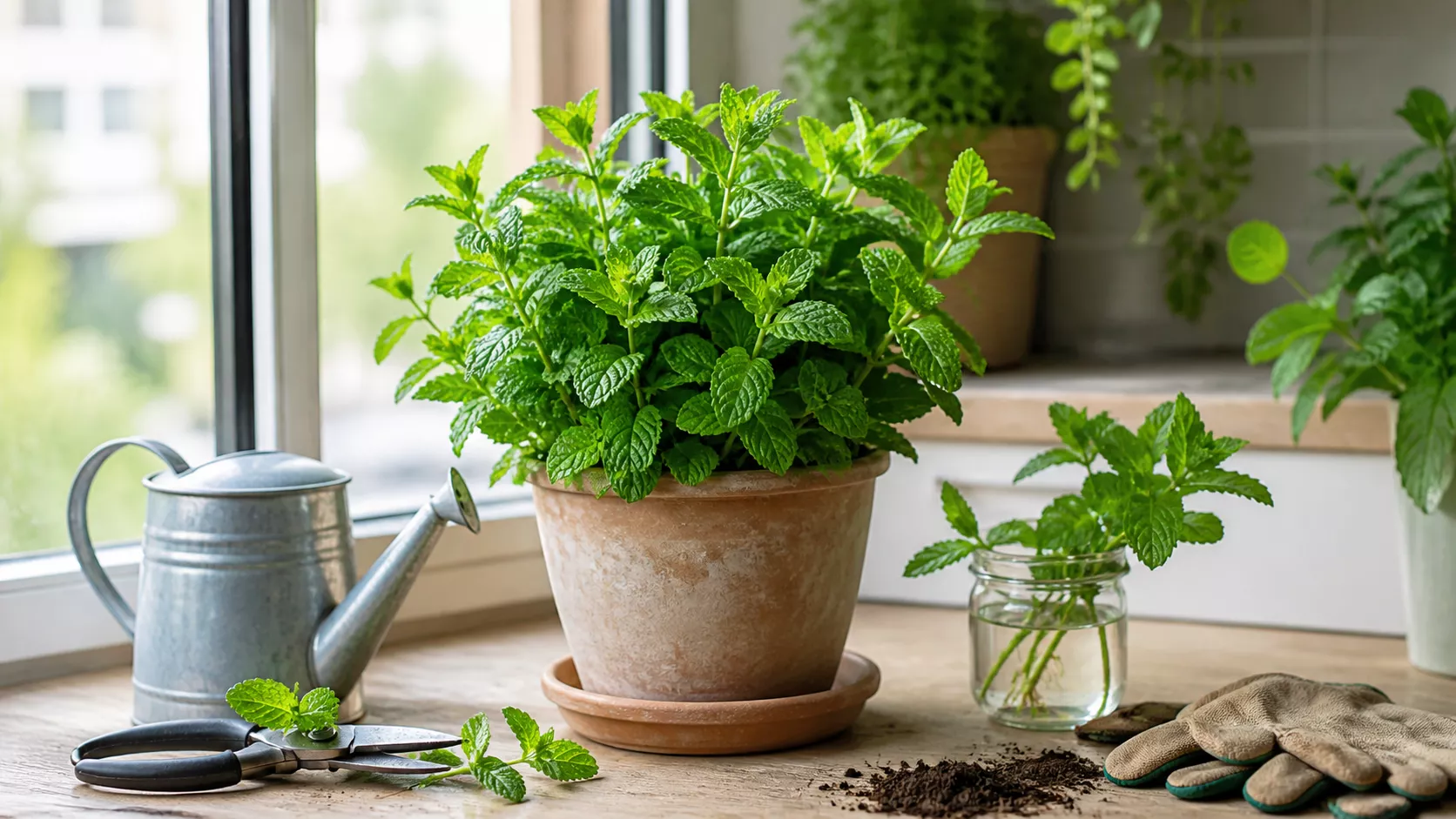
Next, choose a pot that gives mint enough room to grow. Mint does not need a huge container, but it grows better in a medium pot than in a tiny one.
The pot should have drainage holes. Mint likes moisture, but it does not like soggy soil. Drainage allows excess water to escape and protects the roots.
Also, wider pots can work well because mint spreads sideways. A stable container helps the plant grow fuller and makes harvesting easier.
Another important factor is soil. Mint grows best in fertile, light, and well-draining soil that holds some moisture.
A good potting mix is usually enough for mint in containers. You can add compost or organic matter to support steady growth, but the soil should not become heavy or compacted.
Additionally, avoid using dense garden soil in pots. It can hold too much water and reduce airflow around the roots.
Mint grows best in bright light. It can handle some direct sun, especially in the morning, but it may appreciate partial shade in very hot climates.
If mint receives too little light, it may become leggy, weak, and less flavorful. The stems may stretch, and the plant may produce fewer healthy leaves.
Ideally, place mint where it receives bright light for several hours. A balcony, patio, bright window, or garden area can work well depending on your home.
Yes, mint can grow indoors if it receives enough light. A bright windowsill is usually the best indoor location.
However, indoor mint may become weak if the room is too dark. If the plant grows long stems with small leaves, it probably needs more light.
Also, indoor mint needs good airflow and careful watering. Since indoor soil may dry more slowly, always check moisture before adding water.
Watering is very important for growing mint in pots. Mint likes soil that stays lightly moist, but it should not remain soggy.
Before watering, touch the top layer of soil. If it feels slightly dry, water the plant thoroughly. If it still feels wet, wait.
During hot weather, mint in pots may need more frequent watering, especially on sunny balconies. In cooler or indoor conditions, it may need less water.
Often, mint shows clear signs when it needs water. The leaves may droop, curl slightly, or look soft. The soil may feel dry, and the pot may feel light.
If the plant is only mildly thirsty, it often recovers after a good watering. Water deeply and let excess water drain away.
However, do not let mint dry severely too often. Repeated stress can weaken the plant and reduce leaf quality.
Although mint likes moisture, overwatering can still cause problems. If the soil stays soggy, roots may become stressed and leaves may turn yellow.
Signs of overwatering include yellow leaves, wilting despite wet soil, unpleasant soil smell, fungus gnats, and weak stems.
To prevent this, use a pot with drainage, choose well-draining soil, and avoid watering automatically. Check the soil first every time.
For beginners, planting mint from a seedling is the easiest method. Choose a healthy plant with green leaves, firm stems, and no visible pests.
To plant it, fill a pot with good potting mix, place the seedling at the same depth it was growing before, and cover the roots gently with soil.
After planting, water well and place the pot in bright light. Keep the soil lightly moist while the plant adjusts to its new container.
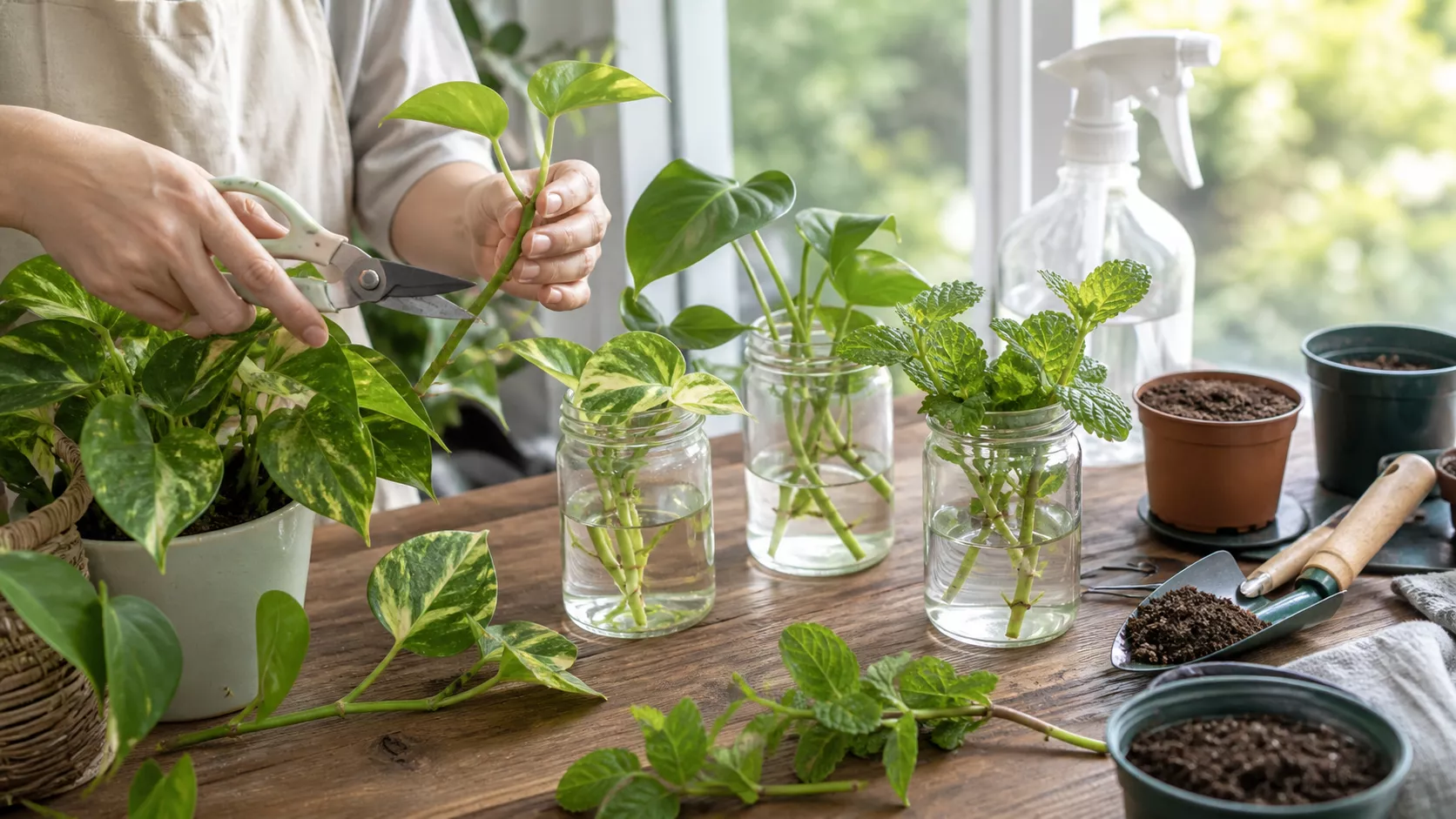
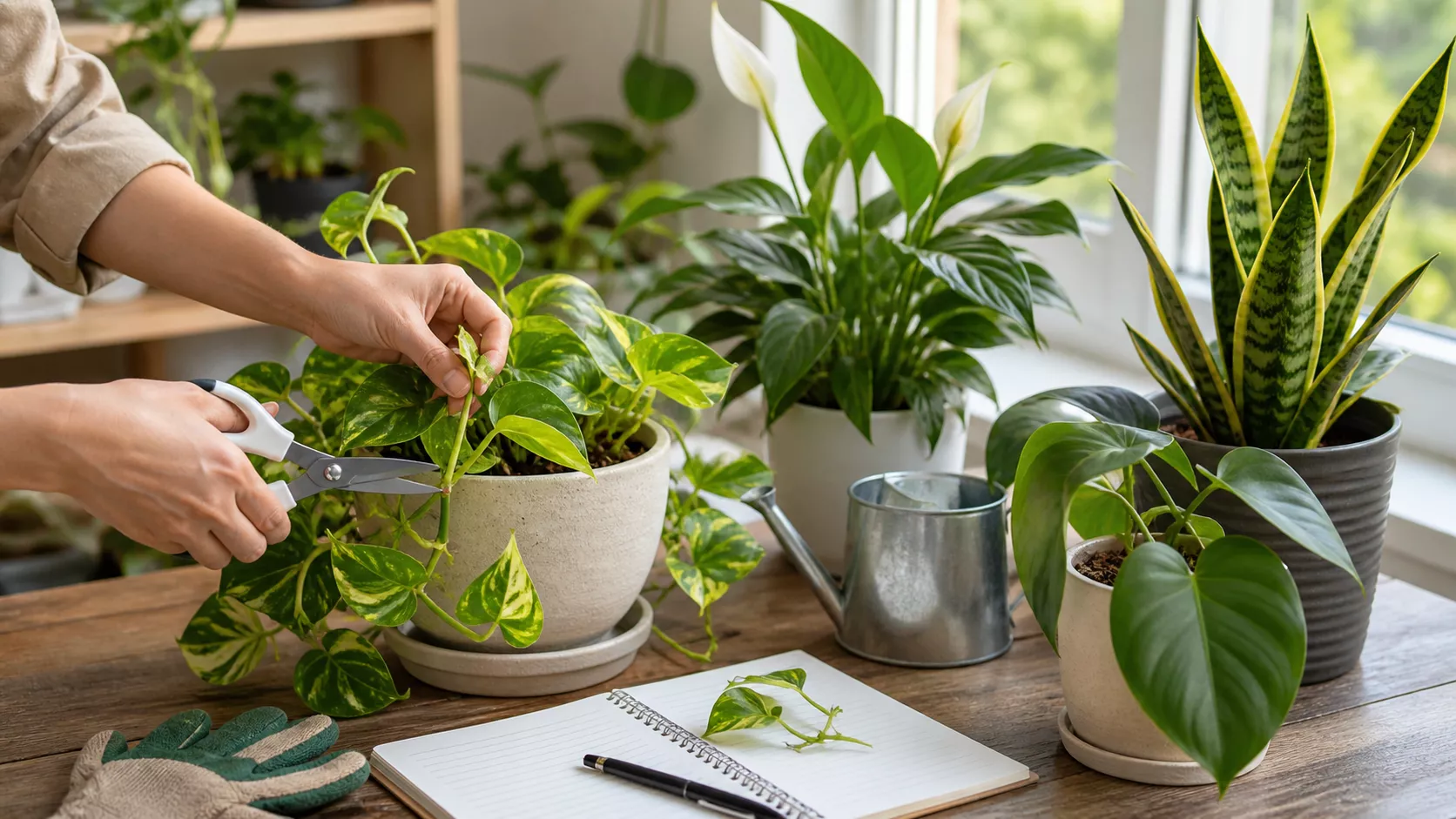
Mint is easy to propagate from cuttings. Cut a healthy stem below a node and remove the lower leaves.
Then, place the cutting in a glass of clean water, keeping the node underwater. Put the glass in bright indirect light and change the water regularly.
Once roots grow several centimeters, plant the cutting in soil. This is a simple way to create new mint plants from an existing one.
Yes, mint can grow from seeds, but it may be slower and less predictable than growing from cuttings or seedlings.
To start seeds, use a shallow container with light soil and keep the surface gently moist. Place the container in a bright warm area.
However, many beginners prefer seedlings because they are faster and easier. Mint cuttings are also very simple and usually root quickly.
Pruning is essential for keeping mint full and healthy. If you do not prune it, mint may become long, thin, and messy.
To prune, cut stems just above a pair of leaves. This encourages the plant to branch and produce more growth.
Additionally, remove weak, yellow, or damaged stems. Regular pruning keeps the plant attractive and productive.
Harvesting mint is easy. Cut healthy stems with clean scissors instead of removing only random leaves. This encourages new branching.
For regular use, harvest small amounts often. Avoid removing more than one-third of the plant at once, especially if the plant is young.
Also, harvest before flowering for the best leaf quality. Once mint flowers, the plant may become less focused on producing tender leaves.
Usually, yes. If your goal is leaf production, remove flower buds when they appear. Flowering can change the plant’s energy and reduce leaf quality.
To remove flowers, pinch or cut the flowering stems before they open fully. This encourages the plant to keep producing leaves.
However, if you grow mint outdoors and want to attract pollinators, you can allow some flowers. Just remember that the plant may become less leafy during flowering.
To keep mint bushy, provide enough light, water consistently, and prune regularly. Tip pruning encourages side shoots and fuller growth.
If mint becomes leggy, move it to a brighter location and cut back long stems. Healthy mint usually responds well with fresh new growth.
Also, avoid overcrowding. If the pot becomes too full, divide the plant or move part of it to another container.
Mint grows quickly, so it may become root-bound faster than slower herbs. If the plant dries too quickly, stops growing well, or roots fill the pot, it may need repotting.
When repotting, choose a slightly larger pot with drainage holes. Refresh the soil and remove any weak or crowded roots if necessary.
Additionally, you can divide mint during repotting. This helps control growth and gives you new plants.
Dividing mint is simple and useful when the plant becomes too crowded. Remove the plant from the pot and gently separate the root mass into smaller sections.
Each section should have roots and healthy stems. Plant the divisions in separate pots with fresh soil.
After division, water well and keep the plants in bright light. They may need a short time to recover, but mint usually adapts well.
Mint can benefit from light fertilization, especially when grown in pots. Since it grows quickly, it uses nutrients from the soil over time.
Use a balanced fertilizer at a gentle strength or add compost to the soil. Avoid overfertilizing because this can cause weak growth.
Also, do not fertilize a stressed plant. If mint is yellowing from overwatering or poor light, correct the problem first.
A balcony can be a great place for mint, especially if it receives bright light and some protection from intense heat.
Mint on balconies may need more frequent watering because sun and wind can dry the soil quickly. Check moisture often during hot days.
Also, keep mint in its own pot so it does not invade other herbs. This is especially important in small balcony gardens.
Mint can grow in the kitchen if there is a bright window. It is convenient because you can harvest fresh leaves for teas, drinks, and recipes.
However, avoid placing mint too close to the stove, oven, or areas with oil splashes. Heat and residue can damage leaves.
If the kitchen is too dark, mint may become weak. In that case, move it to a brighter window or use a grow light.
Although mint is easy to grow, it can still develop problems. Yellow leaves, wilting, pests, leggy growth, dry tips, and root crowding are common concerns.
Most problems are related to light, watering, pot size, or airflow. Checking these basics can solve many issues.
Because mint grows fast, it can often recover well when problems are corrected early.
Yellow leaves can happen from overwatering, poor drainage, low light, nutrient deficiency, or natural aging.
If the soil is wet and leaves are yellowing, reduce watering and check drainage. If the plant is pale and weak, it may need more light.
Remove yellow leaves and correct the main cause. Healthy new growth is a sign that the plant is improving.
Mint wilting may happen because of dry soil, heat stress, transplant shock, or root problems.
First, check the soil. If it is dry, water thoroughly. If it is wet and the plant is wilting, overwatering or damaged roots may be the issue.
Also, newly transplanted mint may wilt briefly while adjusting. Keep it in bright but gentle light and avoid extreme conditions.
Leggy mint has long stems with fewer leaves. This usually means the plant needs more light or more pruning.
To fix it, move the plant to a brighter location and cut back long stems. Mint usually responds with fuller growth.
Additionally, regular harvesting prevents legginess and keeps the plant compact.
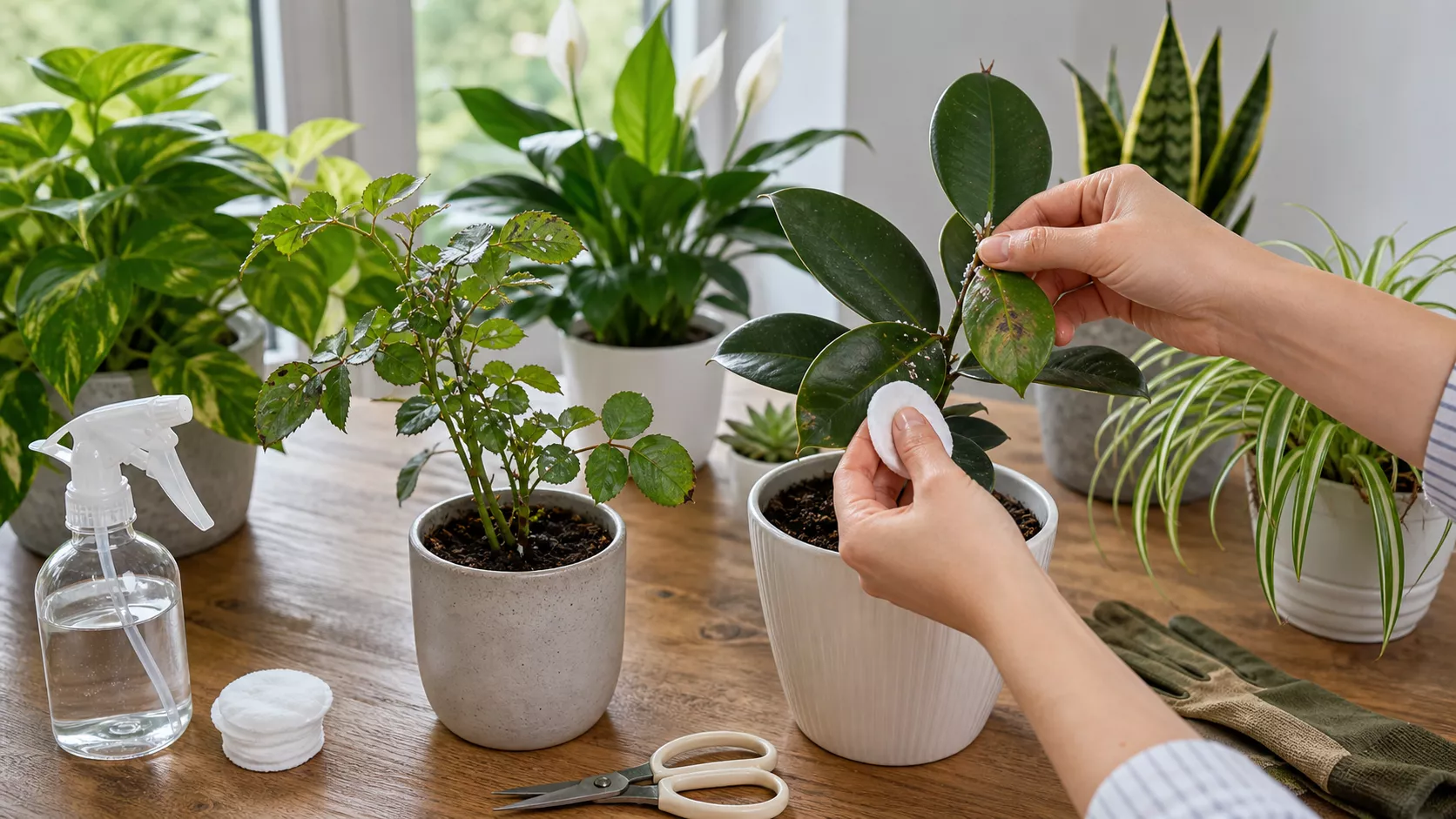
Mint can attract pests such as aphids, spider mites, whiteflies, and mealybugs. Outdoor mint may also attract caterpillars or other insects.
Inspect leaves regularly, especially under leaves and near new growth. Look for sticky residue, small insects, holes, or curled leaves.
If pests appear, use safe methods suitable for edible herbs. Avoid harsh chemicals on leaves you plan to use in food or drinks.
Fresh mint is best used soon after harvesting. You can place cut stems in a glass of water for short-term storage.
Alternatively, wrap leaves gently in a slightly damp paper towel and keep them in a container in the refrigerator.
For longer storage, mint can be dried or frozen. Frozen mint works well for drinks and some recipes, while dried mint is useful for teas.
Mint leaves can be used in teas, lemonades, flavored water, fruit salads, desserts, sauces, and fresh dishes. The plant is versatile and easy to harvest.
Additionally, mint can be combined with other herbs in recipes, but it should usually grow separately in the garden because of its spreading habit.
Because mint grows quickly, regular use helps keep the plant under control and encourages new leaves.
One common mistake is planting mint with other herbs. Mint spreads quickly and can dominate the pot.
Another mistake is letting mint dry severely too often. Although it is hardy, mint grows better with consistent moisture.
Also, avoid keeping mint in low light. Without enough brightness, it becomes weak and leggy.
To care for mint successfully, place it in bright light, grow it in its own pot, and keep the soil lightly moist.
Then, prune and harvest regularly to encourage bushy growth. Remove flowers if you want more leaves.
Finally, check for pests, refresh the soil when needed, and divide the plant if it becomes crowded. Mint care is simple when you control its growth.
In conclusion, learning how to plant mint without mistakes is mainly about giving the plant enough light, consistent moisture, good drainage, and its own container. Mint is easy to grow, but it must be controlled because it spreads quickly.
Above all, plant mint separately, prune it regularly, and avoid both severe dryness and soggy soil. These habits keep the plant healthy, full, and productive.
Ultimately, mint is one of the best herbs to grow at home because it is fresh, aromatic, useful, and beginner-friendly. With simple care, you can enjoy mint leaves for teas, drinks, desserts, and recipes throughout the growing season.