How to Care for Plants When Traveling

First, learning how to care for plants when traveling is important for anyone who wants to leave home without worrying about wilted leaves, dry soil, or stressed plants. Whether you travel for a weekend, a week, or longer, a simple plan can help your plants stay healthier while you are away.
Additionally, different plants have different needs. Succulents, cacti, snake plants, and ZZ plants can usually handle short dry periods better than ferns, basil, mint, peace lilies, or calatheas. Because of this, the best travel routine depends on the types of plants you have.
Therefore, this guide will explain practical plant care while on vacation. You will learn how to prepare plants before traveling, water correctly, protect them from heat, group plants, use simple self-watering ideas, ask for help when needed, and avoid common mistakes that can harm your plants while you are away.
First, before preparing your plants for a trip, identify which ones need more attention. Some plants are drought-tolerant and can stay without water for several days, while others need consistent moisture.
For example, snake plant, ZZ plant, cactus, succulent, aloe vera, and jade plant usually tolerate dryness better. Ferns, peace lilies, calatheas, basil, mint, parsley, and many seedlings may need more preparation.
Also, consider pot size. Small pots dry faster than large pots. Plants in terracotta pots may dry faster than plants in plastic or glazed ceramic pots. Understanding these differences helps you plan better.
Next, weather can change how quickly plants use water. Hot, dry, windy, or sunny weather can make soil dry much faster. Cool, cloudy, or humid weather can slow drying.
If your trip happens during hot weather, plants near windows, balconies, and patios may need extra protection. If the weather will be cooler or rainy, outdoor plants may need less watering or more drainage attention.
Therefore, adjust your plan based on the season. A method that works for a short winter trip may not be enough during a hot summer week.
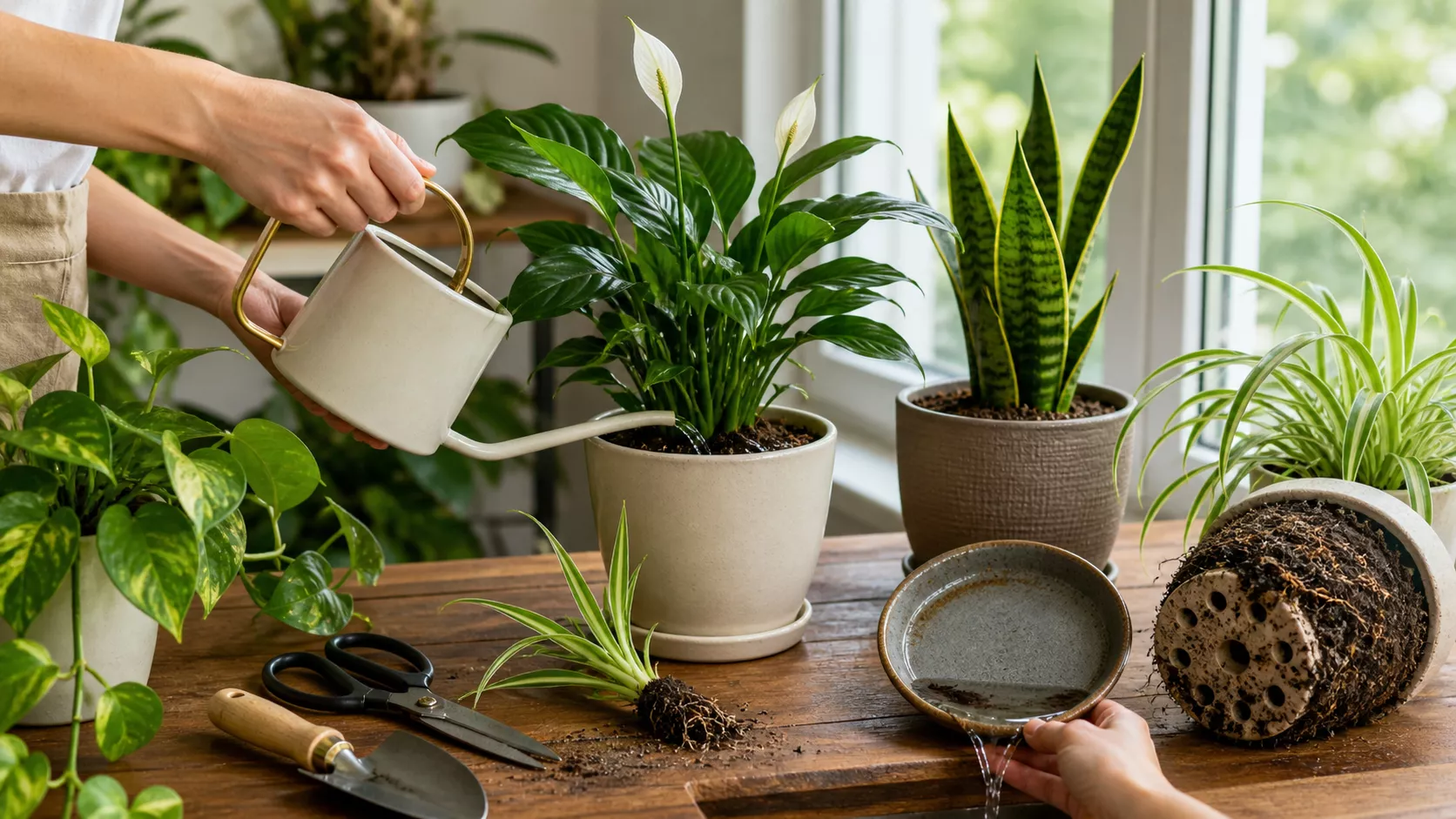
Before traveling, water the plants that need moisture. Do this carefully and thoroughly so water reaches the root system.
When watering, add water until it drains from the bottom of the pot. This ensures the whole root ball receives moisture instead of only the top layer of soil.
However, do not water plants that prefer dry soil if they are still moist. Succulents, cacti, snake plants, and ZZ plants should not be soaked unnecessarily before a short trip. Check the soil first.
Importantly, do not leave pots sitting in saucers full of water unless the plant and method are specifically suitable for that setup. Standing water can cause root stress, especially for plants that dislike soggy soil.
Many beginners think leaving extra water under the pot will keep plants safe, but it can lead to yellow leaves, bad smell, fungus gnats, or root rot.
Instead, water thoroughly, let the excess drain, and empty the saucer. Healthy moisture in the soil is better than stagnant water around the roots.
One useful step is moving plants slightly away from intense direct sunlight before traveling. Strong sun can dry soil quickly and stress leaves while you are not there to respond.
For many indoor plants, bright indirect light is safer than harsh afternoon sun during a trip. Pothos, peace lily, philodendron, fern, calathea, and anthurium can benefit from filtered light while you are away.
However, do not move sun-loving plants into darkness. Succulents, cacti, rosemary, basil, and many herbs still need enough brightness. The goal is to reduce extreme heat, not remove light completely.
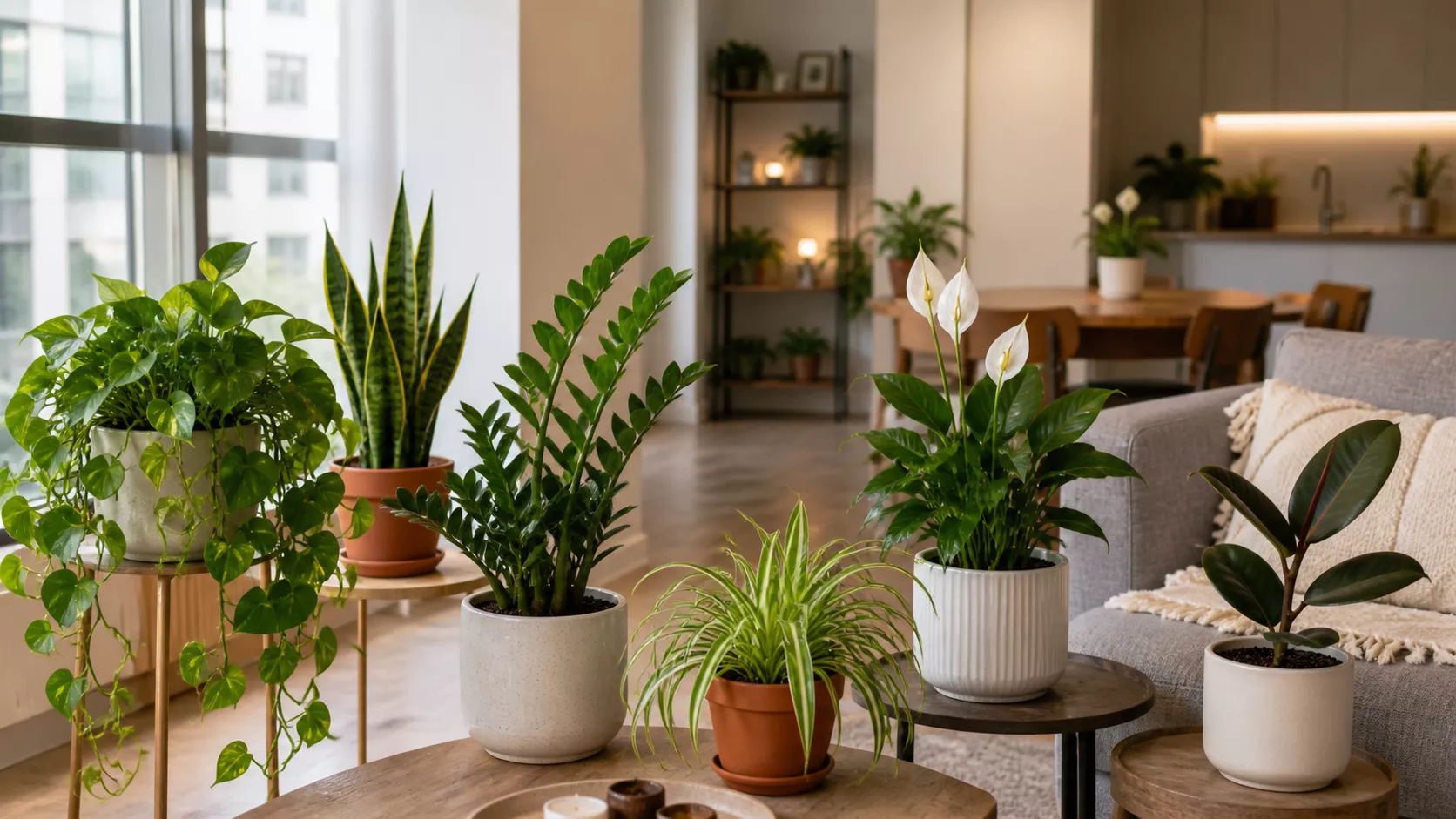
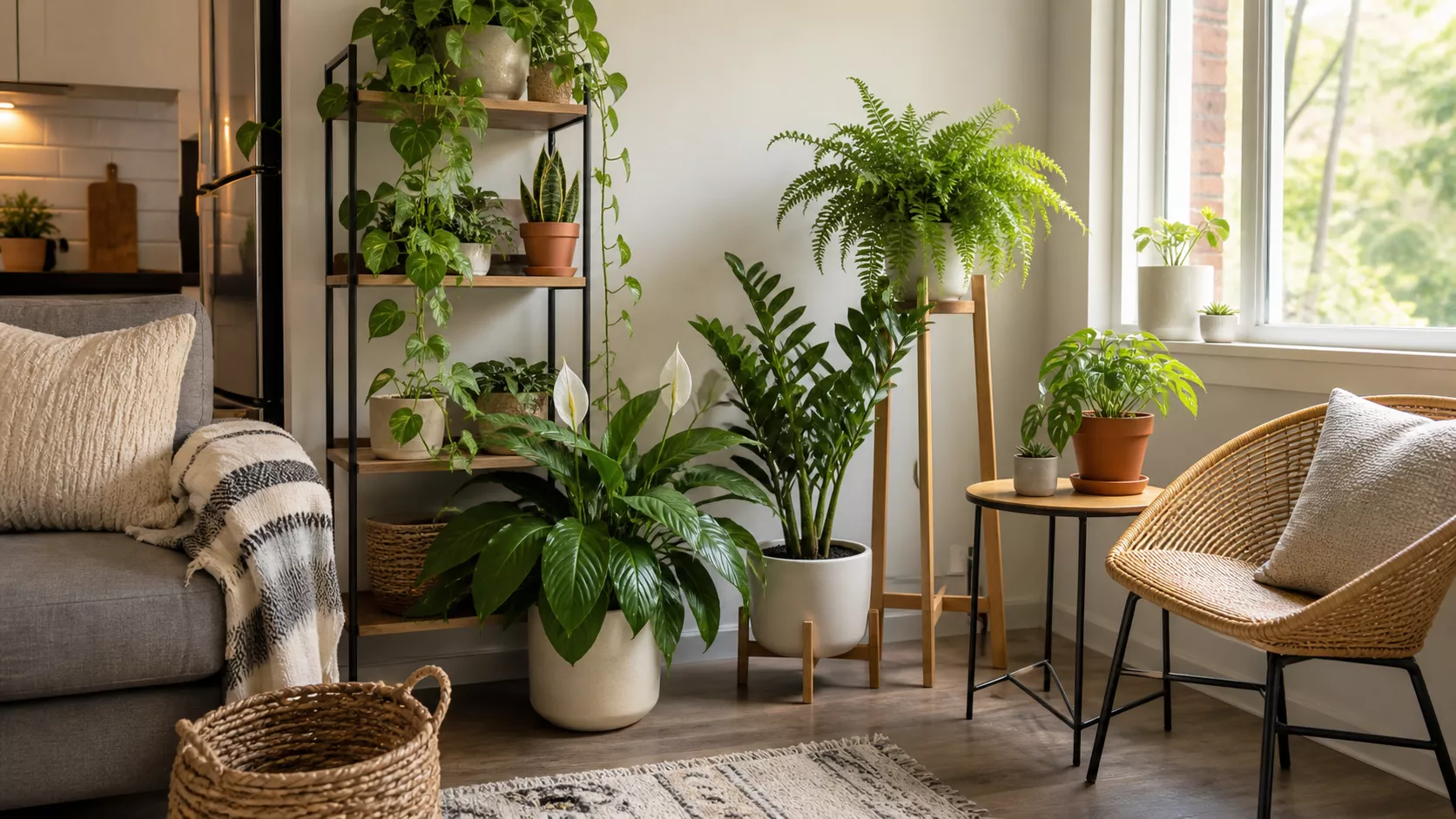
Grouping plants can help create a slightly more humid microclimate. This is especially useful for tropical plants that dislike dry air.
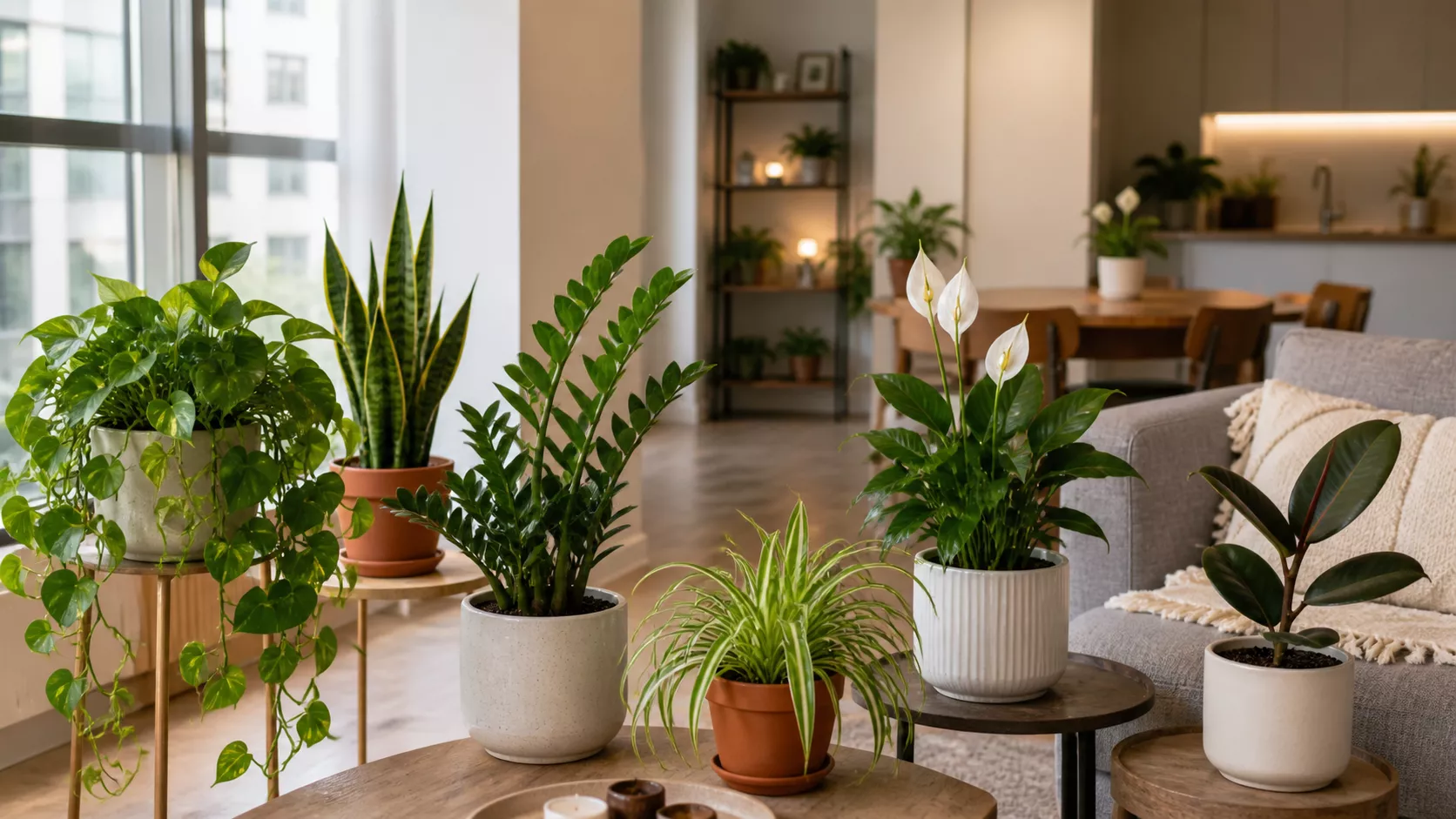
Place plants with similar light and watering needs near each other. For example, group tropical houseplants in a bright indirect light area and keep succulents in a brighter, drier location.
Also, avoid crowding them too tightly. Plants still need airflow. Leave enough space so leaves are not pressed together and pests are easier to notice when you return.
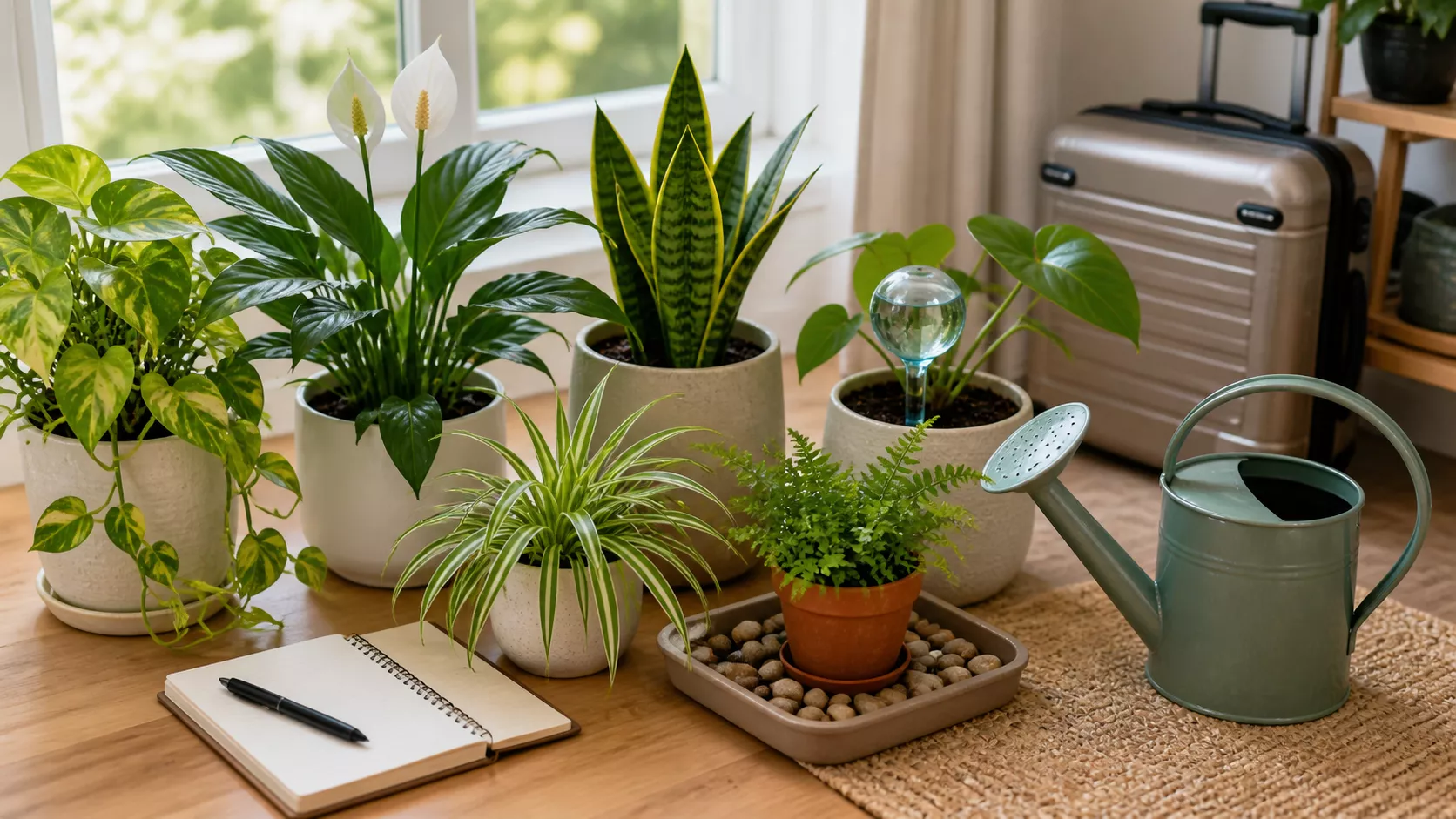
A humidity tray can help plants that enjoy extra air moisture. Place pebbles in a tray, add water below the top of the pebbles, and place the pot on the pebbles.
Make sure the bottom of the pot does not sit directly in water. The goal is to increase humidity around the plant, not soak the roots.
This method can be helpful for ferns, calatheas, peace lilies, anthuriums, and some tropical houseplants, especially during dry weather.
Heat makes plants use water faster. Before traveling, check whether any plants are near hot windows, heaters, electronics, or appliances that release heat.
Move sensitive plants to a slightly cooler area with indirect light. This helps slow water loss and reduces stress while you are away.
Also, avoid placing plants in closed areas that become extremely hot during the day. A bright but stable room is usually better than a hot windowsill.
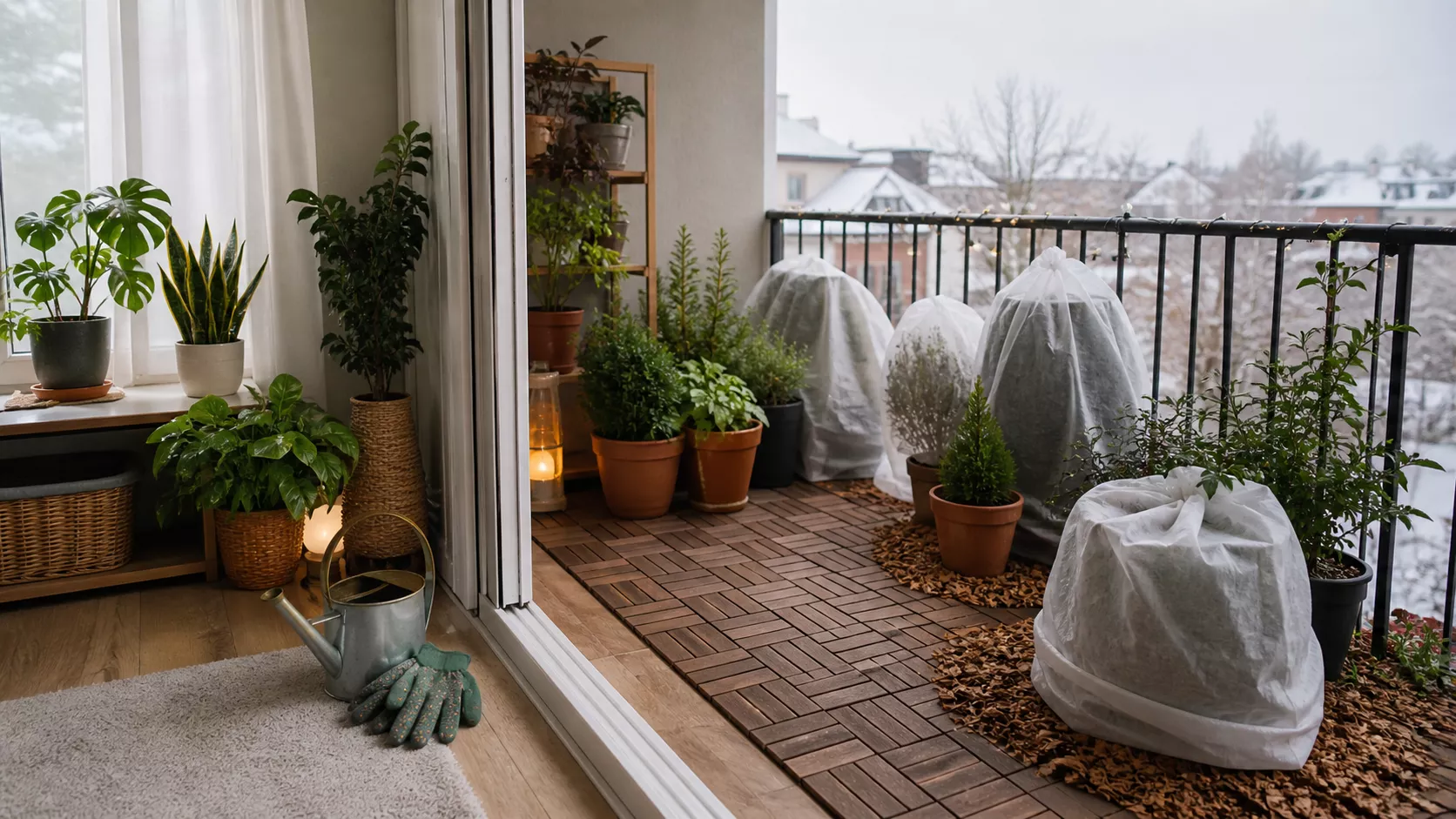
Balcony plants may need extra preparation because they face sun, wind, rain, and temperature changes. Small pots on balconies can dry very quickly.
Before leaving, move sensitive pots to a protected area with bright light but less harsh sun and wind. Group containers carefully and make sure they are stable.
Also, check drainage. If rain is expected, do not leave plants where they can become waterlogged. If heat is expected, avoid leaving delicate plants exposed to intense afternoon sun.
Before traveling, make sure each pot drains properly. Blocked drainage holes can cause water to collect in the soil, especially if someone else waters the plants or rain reaches them.
Lift pots and check the bottom when possible. Remove debris, dead leaves, or compacted soil that may block drainage.
This step is especially important for outdoor pots, balcony planters, and decorative cachepots where hidden water can collect.
Cleaning plants before a trip helps reduce pests, mold, and fungal problems. Dead leaves on the soil surface can hold moisture and attract insects.
Before leaving, remove dry leaves, yellow leaves, spent flowers, and fallen debris from pots. This keeps the plant area cleaner and healthier.
Also, inspect leaves while cleaning. If you notice pests before traveling, treat the problem early or isolate the plant so pests do not spread while you are away.
Avoid fertilizing immediately before a trip, especially if you will not be home to observe the plant’s reaction. Fertilizer can stress roots if applied incorrectly or if the plant dries out while you are away.
Also, fertilizer encourages growth, and new soft growth may need more water. This can be inconvenient when no one is available to care for the plant.
Instead, fertilize when you are home and can monitor the plant. Before traveling, focus on stable watering, light, and placement.
Repotting can cause temporary stress. A recently repotted plant may need closer observation while it adjusts to new soil and root disturbance.
Because of this, avoid repotting right before traveling unless it is an emergency. A plant with root rot or a broken pot may need immediate action, but routine repotting can wait.
If you recently repotted a plant, place it in gentle light and make sure moisture is balanced before leaving. Recently disturbed roots can be more sensitive.
Heavy pruning can stress some plants and encourage tender new growth. This new growth may be more sensitive to dryness, heat, or light changes.
Before a trip, it is better to remove only dead, yellow, or damaged leaves. Keep the plant stable instead of making major changes.
For herbs, you can harvest lightly before traveling, but avoid cutting the plant too aggressively. Leave enough foliage so it can continue producing energy.
Self-watering pots can be helpful for plants that like consistent moisture, such as some herbs, peace lilies, and tropical plants. They can reduce watering stress during short trips.
However, they are not ideal for every plant. Succulents, cacti, rosemary, thyme, snake plants, and ZZ plants may suffer if the soil stays too moist.
Before relying on a self-watering pot, test it while you are home. This lets you see how the plant responds before using it during travel.
Watering globes can slowly release water into the soil. They may help some plants during short trips, but they are not perfect for every situation.
The release speed depends on soil texture, pot size, and how the globe is placed. Sometimes water releases too quickly or too slowly.
Therefore, test watering globes before traveling. Do not use them for the first time on the day you leave.
Wick watering is a simple method where a cotton cord or wick carries water from a container into the soil. It can help moisture-loving plants stay hydrated.
To use it, place one end of the wick in water and the other end in the plant’s soil. The plant receives moisture gradually.
However, this method should be tested before your trip. It is better for plants that enjoy moisture, not for plants that prefer dry soil.
Some people place plants in a shallow tray with water while traveling. This may help certain moisture-loving plants for short periods, but it can be risky.
If roots stay wet too long, the plant may develop root problems. This method is not suitable for succulents, cacti, or plants that dislike wet soil.
If you use any bottom-watering method, test it first and use it only for plants that can tolerate consistent moisture.
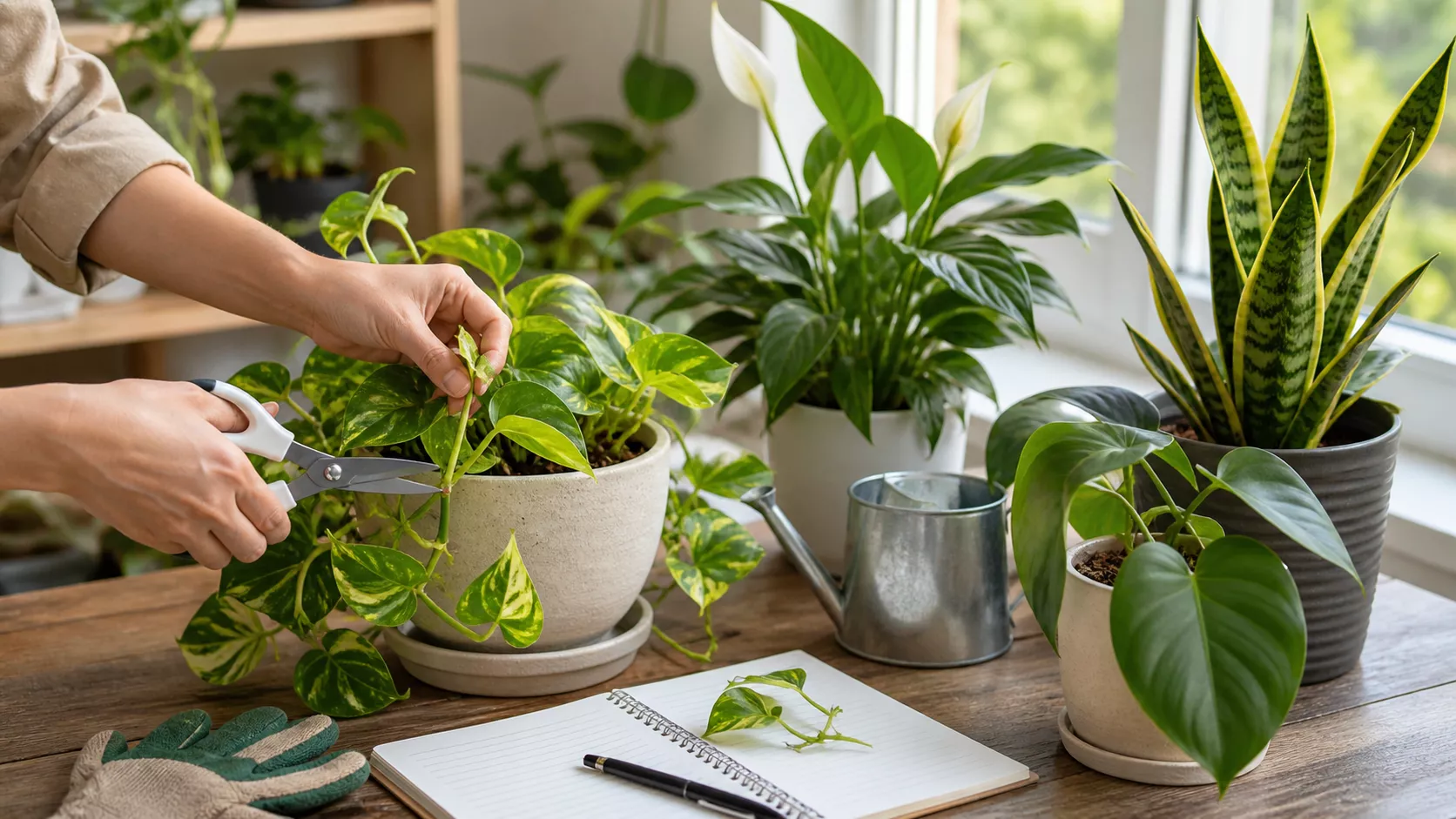
If someone will care for your plants, leave clear instructions. Simple notes prevent overwatering, which is one of the most common problems when other people help.
Write down which plants need water, how to check soil, and which plants should be left alone. Mark sensitive plants clearly.
Also, avoid asking someone to water every plant on the same day unless they truly need it. Soil checking is better than a fixed routine.
For longer trips, asking a trusted person to check plants may be the safest option. This is especially true if you have moisture-loving plants, seedlings, vegetables, or balcony plants.
Explain that not every plant needs water. Ask the person to check soil first and water only when needed.
Additionally, group plants by care needs before you leave. This makes it easier for someone else to help without confusion.
A practical method is to organize plants into groups before traveling. Put drought-tolerant plants together, moisture-loving plants together, and outdoor plants in protected areas.
This organization makes care easier and reduces mistakes. It also helps anyone assisting you understand which plants need more attention.
For example, keep succulents and cacti in a bright dry area, tropical plants in indirect light with humidity support, and herbs in the brightest suitable location.
For a weekend trip, most established houseplants can manage well with simple preparation. Check the soil before leaving and water only the plants that need it.
Drought-tolerant plants such as snake plant, ZZ plant, cactus, and succulents may not need any special watering for a short trip.
However, small herb pots, seedlings, and plants in hot balconies may still need attention because they dry faster.
For a one-week trip, preparation becomes more important. Water moisture-loving plants before leaving, move sensitive plants away from harsh sun, and group tropical plants if needed.
Check small pots carefully because they dry faster than larger pots. Consider self-watering methods for plants that need consistent moisture.
Also, protect balcony plants from extreme sun, wind, or rain. Outdoor conditions can change quickly during a week.
For longer trips, it is usually best to ask someone to check your plants or use tested self-watering systems. Many plants can handle short absences, but long trips are harder.
Before leaving, organize plants, write simple instructions, and make sure drainage and placement are correct.
For valuable or sensitive plants, consider moving them to a friend’s home temporarily if that person can provide better care. This can be useful for delicate plants like calatheas, ferns, seedlings, or herbs.
Succulents and cacti are usually easier to leave during travel because they store water and prefer dry periods.
Before leaving, check the soil. If it is completely dry and the trip is longer, water deeply a few days before departure and let excess water drain.
Do not leave succulents sitting in water or in dark rooms. Keep them in bright light and avoid unnecessary watering.
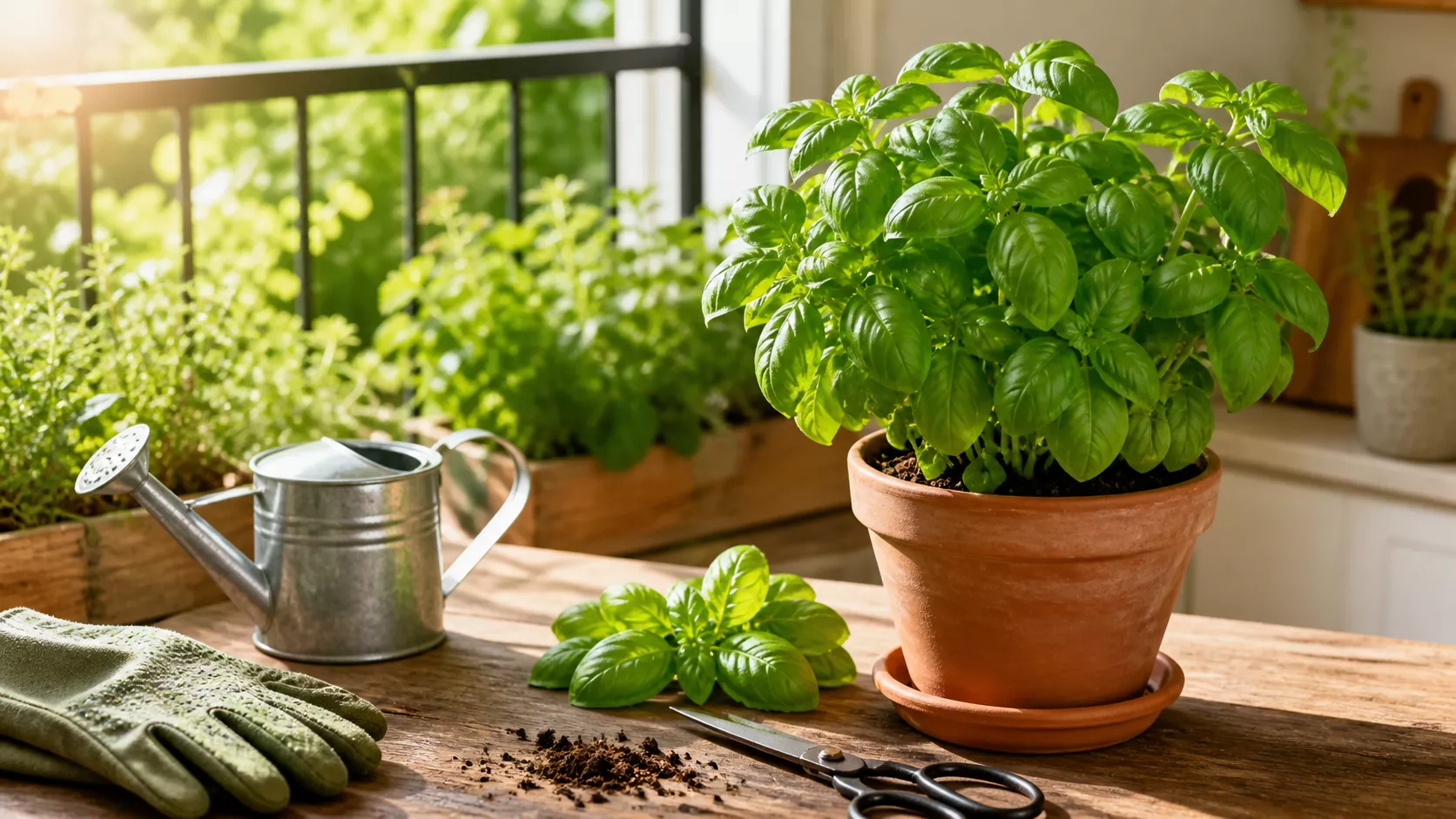
Herbs can be more challenging because many grow fast and need consistent moisture. Basil, mint, parsley, and cilantro may wilt if left dry too long.
Before traveling, water them well if needed and move them away from extreme heat. For longer trips, ask someone to check them or use a tested wick watering system.
Rosemary, thyme, oregano, and sage usually tolerate drier conditions better, but they still need water if the pot dries completely.
Ferns often need consistent moisture and humidity, making them more sensitive during travel.
Before leaving, water ferns if the soil is ready, group them with other humidity-loving plants, and place them in bright indirect light away from heat.
For longer trips, ask someone to check them. Ferns can become crispy if they dry severely.
Peace lily may droop when thirsty, so it needs preparation before travel. Water it thoroughly if the top layer of soil has dried.
Place it in bright indirect light away from harsh sun. This reduces water loss while still giving it enough brightness.
For trips longer than a few days, a tested self-watering method or a helper may be useful, especially in hot weather.
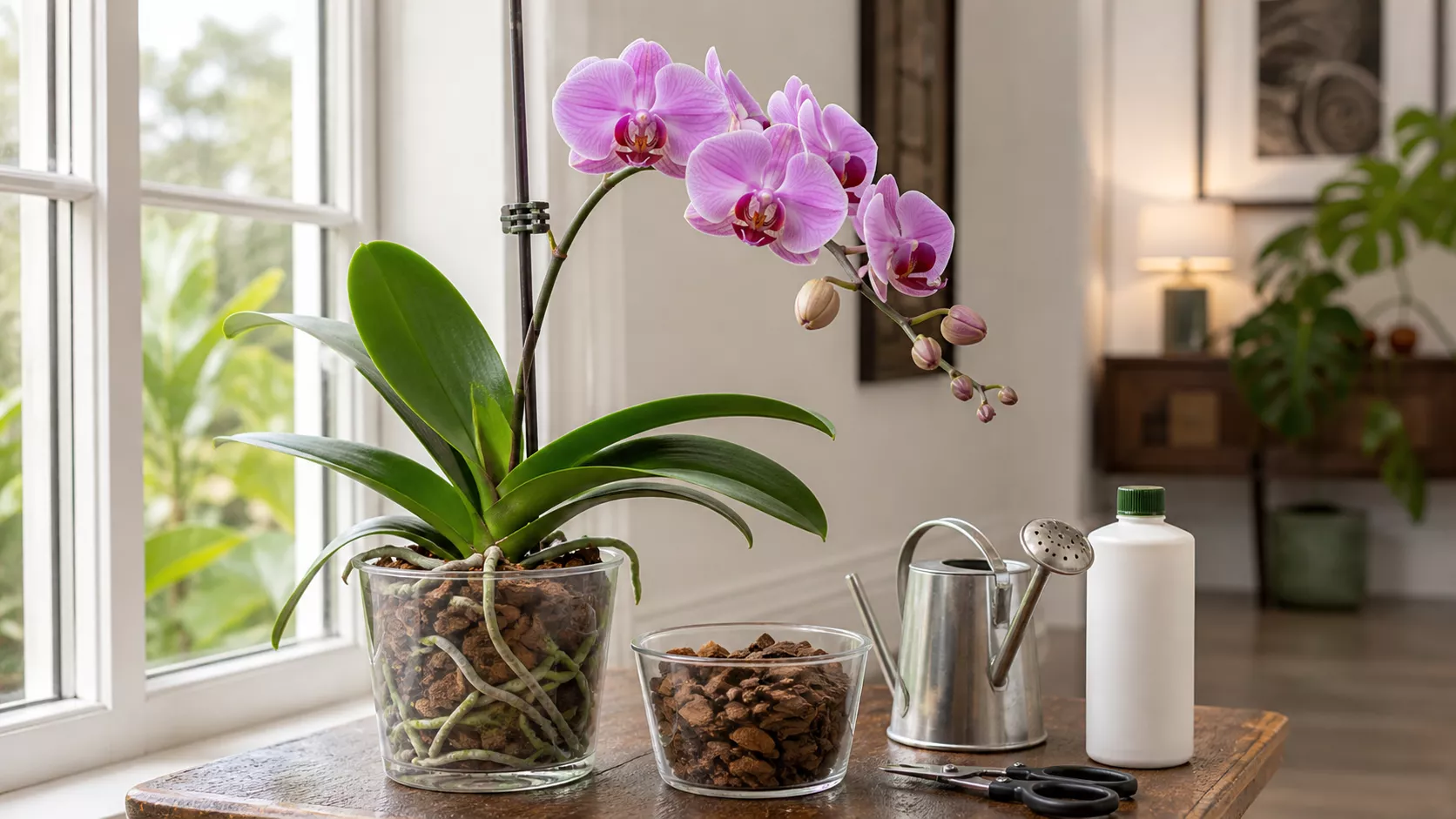
Orchids should not be overwatered before travel. Check the roots and potting medium. If roots are silvery and the medium is nearly dry, water thoroughly and let it drain.
Keep orchids in bright indirect light and away from hot windows or cold drafts. Do not leave water collected in the decorative pot.
For short trips, many orchids can manage well if watered correctly before leaving. For longer trips, ask someone to check the roots and medium before watering.
Balcony gardens need special attention because they are exposed to weather. Sun, wind, and rain can change conditions quickly while you are gone.
Move delicate plants to protected spots, secure lightweight pots, and check weather forecasts before leaving.
If possible, ask someone to check balcony plants during longer trips. Outdoor pots can dry out or become waterlogged faster than indoor plants.
When you return, inspect your plants before watering everything. Some may be dry, but others may still be moist.
Check soil, leaves, stems, and saucers. Empty any standing water, remove yellow leaves, and look for pests.
Then, water only the plants that need it. Avoid panic watering all plants at once because this can create overwatering problems.
If a plant is dry and wilted when you return, water it deeply and place it in bright indirect light. Avoid harsh sun while it recovers.
For very dry soil, water slowly in stages because dry soil can repel water. Let the pot drain fully afterward.
Some leaves may not recover if they became crispy, but the plant may still produce healthy new growth if the roots survived.
If someone overwatered your plants while you were away, stop watering and check the soil. Move the plant to a bright area with good airflow.
If the soil smells bad, stays soggy, or the plant wilts despite wet soil, inspect the roots. Repotting may be needed if root rot has started.
Remove damaged leaves and give the plant stable care. Recovery may take time.
One common mistake is soaking every plant before leaving, even plants that prefer dry soil. This can harm succulents, cacti, snake plants, and ZZ plants.
Another mistake is leaving plants in harsh sun. Heat and direct light can dry soil quickly and burn leaves.
Also, using untested self-watering systems can be risky. Always test any method before depending on it during a trip.
To prepare plants for travel, check soil moisture, water only the plants that need it, move sensitive plants away from harsh sun, and remove dead leaves.
Then, group plants by care needs, protect balcony pots, and use tested self-watering methods only when appropriate.
Finally, for longer trips, ask someone to check plants with clear instructions. A simple plan prevents most travel-related plant problems.
In conclusion, learning how to care for plants when traveling helps you leave home with more confidence and return to healthier plants. Preparation depends on plant type, trip length, weather, pot size, and light conditions.
Above all, avoid overwatering before leaving, protect plants from harsh sun and heat, group similar plants, and use self-watering methods only after testing them.
Ultimately,plant care while on vacation is about planning, not panic. With a simple routine and careful preparation, many plants can stay healthy while you travel and recover quickly when you return.